You know what habits are. We all have them, for better or worse, and we know they’re relatively automatic behaviors. In fact, they become hard-wired into the basal ganglia, a part of the brain also responsible for emotions, memory and pattern recognition.
Habits and decision-making happen in different parts of the brain.
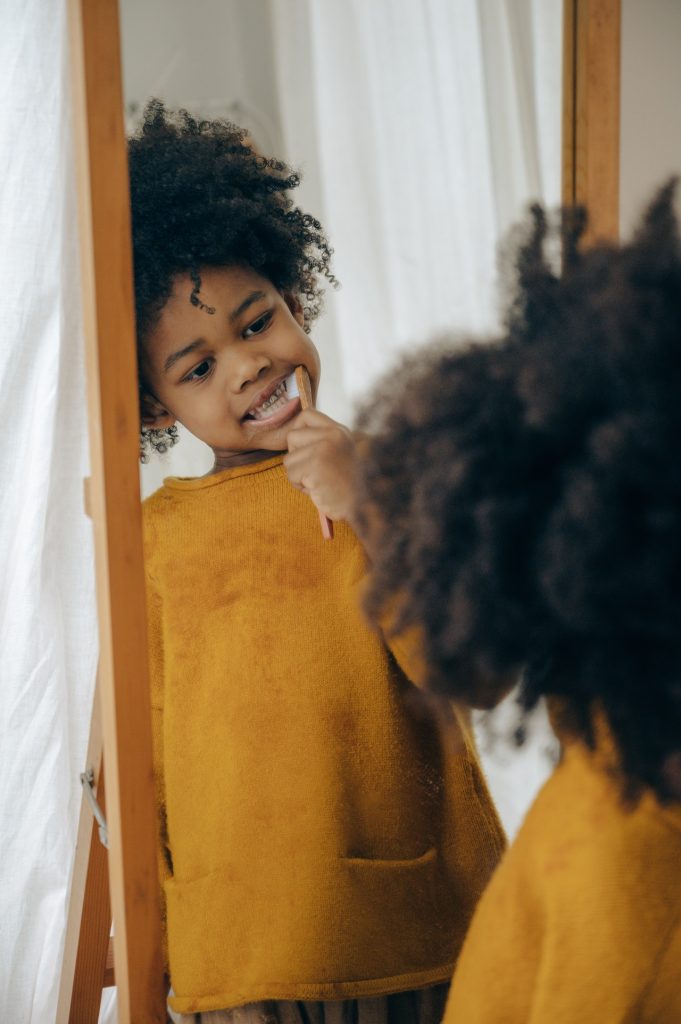
At their best, habits improve our efficiency, allowing us to perform common tasks while saving mental energy to manage other thoughts and actions. They simplify daily activities from checking email to brushing teeth.
However, decision-making happens in the pre-frontal cortex, and is not involved when habits are acted out. If the benefit of habits is simplicity, the cost is engaged decision-making as we perform our habits. In many ways, we’re held captive by our habitual behaviors.
Habit is at the core of Change Management.
Recognizing what habits are, and what they are not, is important for leading change. Habits are part of our innate survival system. Once formed, they aren’t explicitly chosen, so we’re not actively in control of them.
Habits are closely tied to emotional responses that trigger and reward habitual behaviors. Often, resistance to change is less about rationalizing why we don’t want to change and more about just going along with the basal ganglia’s program and accepting the desired benefit.
There’s good news in all of this. Like many challenges, understanding how habits are formed can help us re-write the program in a sense, allowing us to transform target behavior through the habit forming cycle.
The Habit Forming Cycle
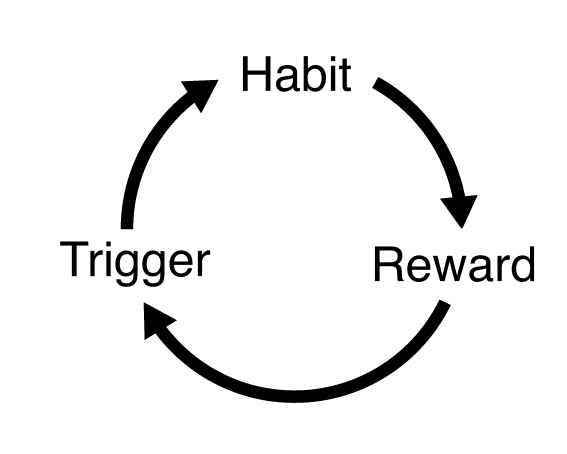
The cycle is surprisingly simple. We receive a cue that triggers the habitual behavior. When we perform the routine behavior triggered by the cue, we get the reward as an automatic benefit from the routine.
We can use this to our advantage, by recognizing the automatic nature of the status quo and intentionally forming new, preferred habits. While habits can’t necessarily be erased, we can replace them. Essentially, we substitute a new, desired routine to be triggered by the existing cue, that provides the same reward.
Equipped with an understanding of how habits are formed and transformed, a successful change agent will anticipate resistance and focus on modifying the behaviors that impede change. We can help develop the organizational structure and skills to recognize and support sustainable behavior change.